
A commercial vehicle has a job to do. It carries tools, delivers products, transports equipment, or helps a team reach customers on time. But…
A commercial vehicle has a job to do. It carries tools, delivers products, transports equipment, or helps a team reach customers on time. But while it’s out on the road, it can do something else, too: introduce a business to people who might never have heard of it otherwise.
Think about a delivery truck parked outside a busy store or a service van traveling through a residential neighborhood. People notice vehicles without necessarily trying to. A clear logo, a memorable color scheme, and a short description of the company’s work can leave an impression that lasts longer than the moment itself.
That’s the practical appeal of commercial vehicle graphics. They turn an everyday business asset into a mobile branding opportunity. Getting the most from that opportunity, however, takes a little planning. The design must be readable, the materials need to suit the vehicle’s working conditions, and the finished graphics should support the company’s reputation rather than distract from it.
Start With What the Vehicle Needs to Communicate
Before choosing colors or discussing a layout, decide what people should understand when they see the vehicle. Is the company a local contractor? A delivery service? A manufacturer serving other businesses? The answer should guide the message.
Commercial vehicles often operate in environments where people have only a few seconds to look. Someone waiting at a traffic signal won’t read a paragraph printed across a trailer. They may notice a company name, recognize a logo, and remember a website if those elements are presented clearly.
Keep the main message focused. A business name and a short service description often provide a useful foundation. Contact details can make the vehicle more practical, particularly when a phone number or website is easy to read. Additional information should earn its place on the design rather than filling space simply because it’s available.
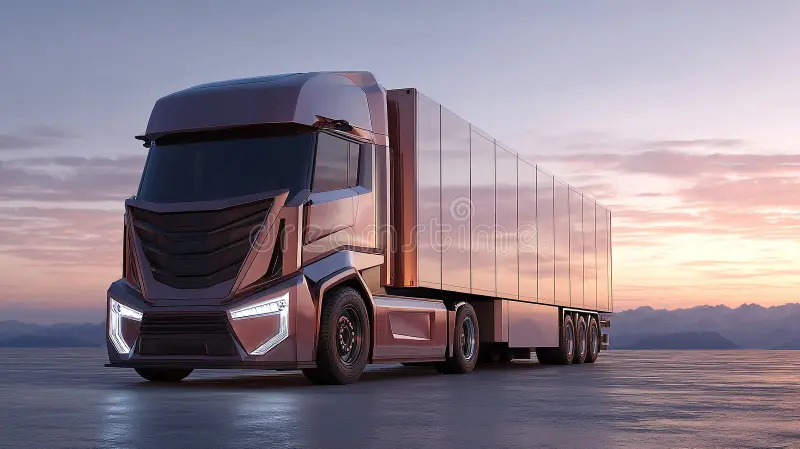
For companies operating trucks and trailers, the layout should also reflect the size and shape of each vehicle. A long trailer offers a large canvas, while a smaller work truck may need a more compact arrangement. Both can carry effective branding, but the same artwork rarely fits every vehicle without adjustments.
Why Readability Matters More Than Decoration
It’s easy to get carried away with visual effects. Gradients, multiple fonts, detailed illustrations, and large blocks of text may look impressive in a presentation, yet become difficult to understand when the vehicle is moving. Commercial graphics need to work at a glance.
Contrast is a good place to begin. Dark text on a light background, or light text on a darker surface, can improve visibility when the colors are chosen carefully. The company name should remain recognizable from a reasonable distance, and essential contact information shouldn’t disappear into the background.
Typography deserves the same attention. A simple, sturdy font is often more practical than an elaborate script, especially when the vehicle travels on highways or works in busy areas. Decorative lettering can still have a place, but it shouldn’t make the message harder to read.
A memorable impactful design doesn’t have to be complicated. Sometimes a strong logo, two complementary colors, and a clear message are enough. The aim isn’t to put every possible design idea on the vehicle. It’s to create a visual identity people can recognize and connect with the business.
Designing Around the Actual Vehicle
Commercial vehicles aren’t flat sheets of material. They have doors, hinges, handles, rivets, seams, windows, and curved panels. These features can affect how graphics look after installation, so they need to be considered from the start.
A logo positioned across a door seam may appear broken when the door is closed or opened. Small text placed near a handle can become difficult to read. On a long trailer, a design may look balanced in a digital mock-up but feel awkward when viewed from the side at ground level.
A professional design process should use accurate vehicle dimensions and account for the areas that need to remain uncovered. It should also consider how people will see the vehicle in real situations: from behind in traffic, from the side while it is parked, or from a distance at a loading facility.
If the business has several vehicle types, create a consistent visual system rather than forcing identical artwork onto every model. The logo, colors, and overall style can remain consistent while individual layouts adapt to the available space.
Choose Materials That Match the Work
Commercial graphics face a demanding environment. Sunlight, rain, dust, road debris, temperature changes, and frequent cleaning can all affect their appearance over time. The material that works for a lightly used company car may not be suitable for a truck that spends most of its week outdoors.
Discuss the vehicle’s daily routine before choosing a product. Does it travel long distances? Is it parked outside overnight? Does it operate in an industrial setting where dirt and abrasion are common? These details help determine which vinyl, laminate, or other graphic material is appropriate.
Installation quality matters just as much. The vehicle’s surface should be inspected and prepared properly before the graphics are applied. Dirt, wax, damaged paint, or poorly repaired areas can interfere with adhesion and affect the final result.
Ask the installer about product specifications, expected service life, warranty coverage, and recommended maintenance. A lower initial price isn’t necessarily the best value if the graphics begin lifting or fading sooner than expected. The right decision balances cost, appearance, durability, and the intended lifespan of the vehicle.
Keep Branding Consistent Across the Fleet
When a business operates multiple commercial vehicles, consistency helps establish a recognizable presence. Customers should be able to identify the company whether they see a small service truck, a delivery van, or a large trailer.
That doesn’t mean every vehicle must look identical. Different body styles call for different layouts, and certain vehicles may need additional operational markings. Still, using the same logo, colors, typography, and core message can help the fleet feel like one coordinated part of the business.
Consistency can also simplify future growth. When another vehicle is added, a documented design system gives the installer a clear starting point. Keeping approved logo files, color values, and layout guidelines on hand helps prevent small differences from appearing across the fleet.
It’s worth reviewing the graphics periodically, too. Contact information can change, services may expand, and branding sometimes evolves. Updating outdated details helps prevent confusion and keeps the company’s public image current.
Understand the Cost Before Work Begins
Pricing depends on several factors, including vehicle size, graphic coverage, material selection, design complexity, surface condition, and installation time. A partial graphic package will generally involve different work from a full wrap, while a large trailer may require more material and labor than a small commercial van.
Before committing, ask for a free estimate that explains what’s included. Find out whether the price covers design, material, printing, surface preparation, installation, and removal of any existing graphics. If certain repairs or extra work may be necessary, ask how those costs will be handled.
A clear estimate makes comparisons more useful. Two quotes may look similar at first but include different materials or levels of service. Understanding the details helps a business make a decision based on value rather than price alone.
Give Every Mile a Purpose
Commercial vehicle graphics work best when they’re treated as part of a broader business identity. They should reflect the company’s character, communicate its services, and remain practical for the people who use the vehicle every day.
Start with a clear message, design around the actual vehicle, and choose materials suited to its working conditions. Then keep the graphics clean and update them when the business changes. These are straightforward steps, but they make a difference.
A branded commercial vehicle won’t replace good customer service or a strong reputation. It can, however, help more people recognize the business behind the work. Over time, that familiar name on the road may become the one someone remembers when they need the service you provide.