
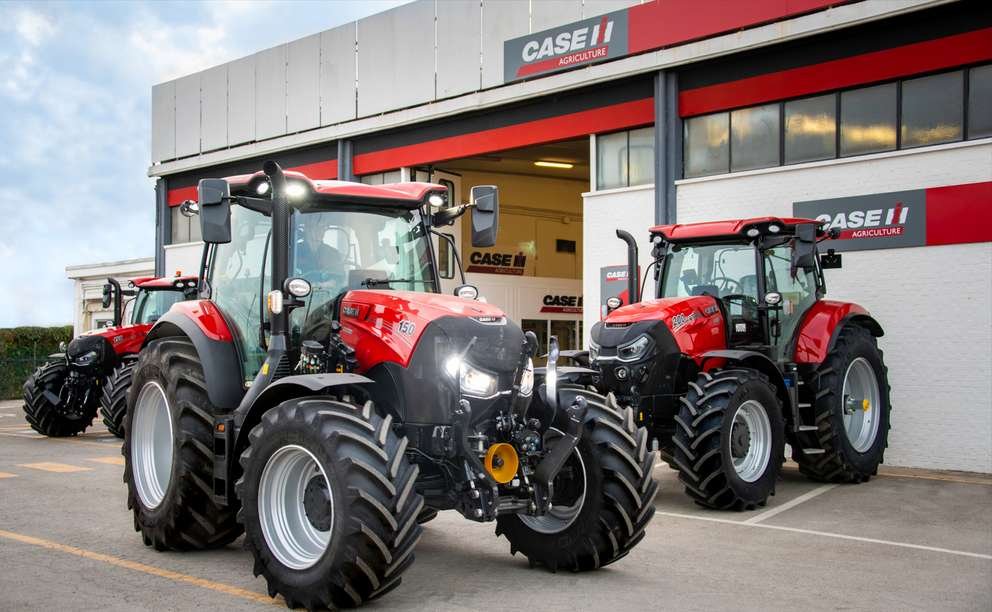
If you’ve ended up with a Case IH 946, 1046, or 1246 sitting in your shed, there’s a good chance you inherited it, bought…
If you’ve ended up with a Case IH 946, 1046, or 1246 sitting in your shed, there’s a good chance you inherited it, bought it secondhand, or found it at an auction for a price too good to pass up. These 2WD row-crop tractors were built in the late 1970s and early 1980s, and plenty of them are still earning their keep on small and mid-size farms today. That’s exactly why the operator’s manual for this model line still gets searched for decades after the last unit rolled off the line — people are actually using these machines, not just collecting them.
Why This Manual Still Matters
A lot of owners assume that because a tractor is “old,” the manual is just a formality. With the 946/1046/1246 series, that’s backwards. These tractors use mechanical systems that reward correct setup — the independent PTO clutch, the dual-range transmission, and the hydraulic lift system all have specific adjustment points that aren’t obvious from looking at the machine. Guess wrong on a linkage adjustment or a clutch free-play setting, and you’ll either wear out a component early or end up thinking something is broken when it isn’t.
The operator’s manual isn’t a Case IH repair manual in the deep technical sense — it won’t walk you through rebuilding a transmission — but it’s the document that tells you how the tractor is supposed to behave, which is the first thing you need before you can diagnose anything.
What’s Actually Inside
The manual covers the ground you’d expect from a factory operator’s guide, laid out so you can find what you need without reading the whole thing front to back:
- Instrument panel and control identification, including the ones that differ slightly between the three models
- Pre-start checks and break-in procedures for a freshly rebuilt engine
- PTO operation, both 540 and 1000 RPM options depending on configuration
- Hydraulic system operation, including the three-point hitch controls
- Scheduled maintenance intervals for oil, filters, coolant, and grease points
- Torque specifications for wheel bolts and other commonly removed hardware
- Troubleshooting charts for starting problems, overheating, and hydraulic response issues
- Storage and winterizing instructions, which matter more than people think in regions with hard freezes
Where the Three Models Actually Differ
The 946, 1046, and 1246 share a chassis and a lot of their drivetrain, but they’re not identical, and this is where people run into trouble buying a manual off a general listing. The main differences come down to engine displacement and horsepower rating — the 1246 sits at the top of the range — along with some differences in available cab configurations and hydraulic pump output. If your tractor has a factory cab, the manual sections on heater and ventilation controls will apply to you and won’t mean much if you’ve got an open-station model. Before you rely on any specification from the manual, match it against your tractor’s serial number plate, not just the model name stamped on the hood.
Finding Your Serial Number and Why It Matters
Case IH changed small details across the production run of this series, and the serial number is what actually tells you which version of the manual applies to your tractor. You’ll typically find it on a plate near the clutch housing or stamped into the frame rail near the front axle. Write it down before you start searching for documentation — it’ll save you from buying a PDF that references a slightly different hydraulic valve body or a transmission variant your tractor doesn’t have.
Using the Manual Alongside a Service Manual
If you’re planning anything beyond routine maintenance — say, a clutch replacement or hydraulic pump rebuild — pair the Case IH operator’s manual with the full service manual for the series. The operator’s manual tells you how things should work; the service manual tells you how to get inside and fix them when they don’t. Trying to do major work with only the operator’s manual is like trying to cook a complicated recipe with only the ingredient list and no instructions.
A Few Practical Tips From Owners Who’ve Been There
People who’ve run these tractors for years tend to repeat the same advice: keep the manual somewhere dry and actually accessible, not buried in a toolbox you only open once a season. Laminate the maintenance interval page if you’re prone to losing paperwork. And if your tractor came without any documentation at all, don’t guess at fluid types or capacities — a wrong transmission fluid or hydraulic oil can cause seal problems that take months to show up and are expensive to trace back to the source.
These tractors were built to last, and with the right documentation in hand, there’s no reason a well-maintained 946, 1046, or 1246 can’t keep working for another few decades.
Related posts

Learning to Drive with Confidence: A Practical Guide to Safer Roads
Learning to drive is one of those milestones that can feel exciting and intimidating at the same time. The idea of having the freedom…
Looking for MX5 Mk4 Parts? Quality Mazda MX-5 ND Parts and Accessories from MX5 City
Owning a Mazda MX-5 Mk4 is about more than simply getting from one place to another. The fourth-generation MX-5, commonly known as the ND,…